
Hanbok carries cultural weight that most clothing does not have to carry. A wedding hanbok is the same garment family as the daily cotton piece worn on a Tuesday in 1640. The line connects a modern bride to her great-grandmother to the figures in the Goguryeo tomb murals from the fifth century. Not a costume, an inheritance.
That continuity is what makes hanbok read differently than other traditional dress. It has not been retired into ceremony only. It still moves into the everyday when a Korean family decides it should. This is a short reading of how hanbok holds Korean culture in its lines, and what that means to a Korean American family deciding whether to commission their first piece.
The design of Hanbok emphasizes harmony and the beauty of nature, with a strong influence from Korean philosophy and the natural world. The presentation as a whole, the fabric’s flow, and the color selection all work together to create a timeless feeling of grace and elegance. Carefully selected, each component of the Hanbok captures the essence of Korea while showing the splendor of its diverse cultural environment.
In addition, Hanbok evokes sentiments of continuity and nostalgia, making Koreans see it with pride. The resurgence of Hanbok in different forms in modern South Korea shows a growing respect for legacy and traditional crafts. This comeback is a reclamation of identity in a world fast modernizing, not just a fashion statement.
Hanbok’s significance today extends beyond its aesthetic value; it acts as a symbol of Korea’s rich cultural legacy and mix. Hanbok is becoming more and more popular around the world, which is encouraging people to recognize and comprehend its significance in both historical and modern situations.
To sum up, Hanbok embodies the values, history, and aesthetics that define the character of the country while smoothly fusing form and function. It is a dynamic depiction of Korean culture.
The Development of Hanbok Throughout History
With origins thought to have occurred during the Three Kingdoms era (57 BC – 668 AD), Hanbok’s history spans more than a millennium. Early Hanbok were modified to fit Korea’s climate while drawing inspiration from surrounding nations’ fashions. The comfortable and adaptable design, which was straightforward but effective, was vital for everyday living in ancient Korea.
The Goryeo Dynasty (918, 1392) saw the beginning of Hanbok’s more recognizable form, which was defined by the use of vivid colors and detailed motifs. During the Joseon Dynasty (1392, 1910), Confucianism had a greater effect on clothing, stressing social position and modesty. During this time, distinct styles formed for various classes, defining social hierarchies through clothes, and Hanbok’s structure changed accordingly.
Korea witnessed substantial upheaval in the 20th century, particularly from 1910 to 1945 while it was under Japanese rule, which prompted attempts to repress Korean culture. Despite these obstacles, Hanbok remained resilient, with many Koreans continuing to disobey colonial authorities by dressing traditionally. A newfound fascination with Hanbok as a representation of pride and identity for the country surfaced following Korea’s liberation in 1945.
After the Korean War, South Korea moved toward industrialization and globalization, and Hanbok started to lose part of its everyday usefulness. It started to be used only on exceptional events, which changed its appearance and use. But in the late 20th and early 21st centuries, there was a rebirth of interest as contemporary designers and artists embraced Hanbok’s rich history.
Important incidents that impacted Hanbok’s character are also evident in the historical trajectory of the city. South Korea’s fast industrialization and urbanization have caused people to reevaluate what it means to dress traditionally in the present day. Hanbok adjusted to the changing cultural environment, expressing modern values while clinging to its history.
The history of Hanbok is, in a sense, interwoven with the development of Korean society and politics. A dress that represents a strong sense of cultural continuity and national identity is the result of the layers of meaning that each age adds to the item.
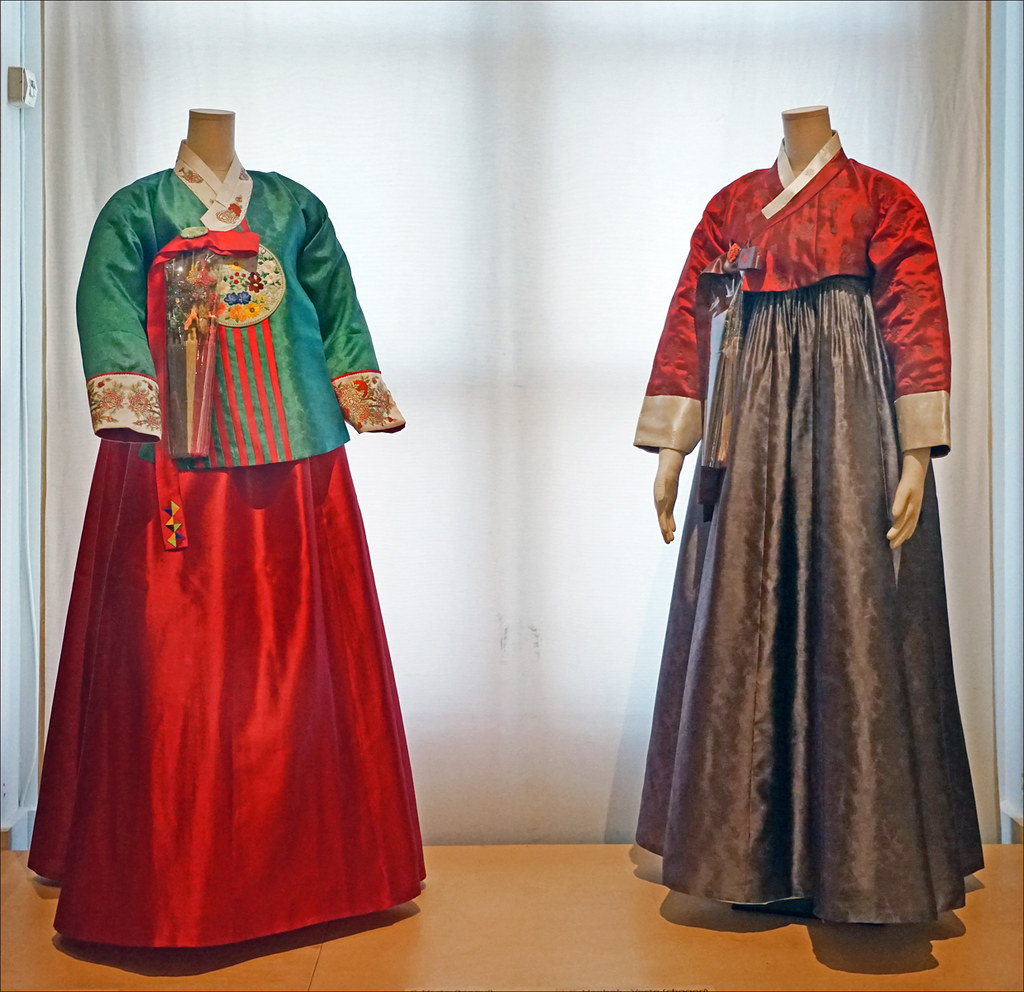
Principal Attributes: Unique Components of Hanbok Design
Hanbok’s structure is among its most distinctive qualities. The chima, or skirt, cascades beautifully down to the ankles, while the jeogori, or jacket, is usually short and fitted to fit around the breast. Hanbok’s loose-fitting style facilitates a comfortable range of motion, making it appropriate for a variety of activities. This design concept emphasizes how crucial comfort and usefulness are to traditional Korean clothing.
Bright color usage is another important feature of Hanbok design. In the past, the wearer’s age, status, and the occasion were taken into consideration when choosing colors. For example, festive occasions typically call for lively, lively colors, but more somber events could call for softer, more muted tones. The colors add to the complex mix of Hanbok’s symbolism by improving the aesthetic appeal and having distinct meanings.
Hanbok’s general style is heavily reliant on patterns, with floral themes, geometric shapes, and naturalistic depictions being commonplace. These designs, which are frequently hand-painted or embroidered, highlight the expert craftsmanship that goes into making each item of clothing. Making patterns is an artistic endeavor that reveals a strong bond with nature, spirituality, and the legacy of Korean craftspeople.
The cloth used in the production of Hanbok is another essential component. Cotton and ramie were utilized for daily wear, while silk was prized for its elegant and opulent texture. Today’s Hanbok design is more accessible and diverse while maintaining its traditional roots thanks to the use of a wide range of fabrics, including synthetic materials.
Hanbok’s accompanying accessories are just as important to its overall style. Norigae (decorative pendants), jeonmo (hair accessories), and an assortment of shoes are among the carefully chosen pieces that accentuate the ensemble. In addition to adding to the overall charm, these ornaments have personal meaning and let the wearer showe their history and life tales.
In summary, the unique components of Hanbok design·its structure, color, pattern, fabric, and accessories·combine to produce an item of clothing that is not only aesthetically pleasing but also has a deep symbolic value. The fine craftsmanship and minute details capture the spirit of Korean culture, exhibiting a tasteful fusion of heritage and individuality.
Symbolism in Traditional Clothing’s Colors and Patterns
Hanbok is well known for its vivid colors, each of which has a rich symbolic value. Bright reds and blues to softer pastels make up the traditional Hanbok color palette. Every hue has a meaning; for instance, the color red denotes luck and happiness, while the color blue stands for peace and hope. Black represents the heavens, whereas yellow is seen as auspicious and connected to the ground.
Hanbok patterns have an equally deep symbolism. Frequently presented prominently, floral themes connect the user to nature and communicate sentiments of beauty and energy. For example, peonies are a common theme that represent prosperity and fortune. The lotus flower, which represents purity, and other geometric shapes that suggest harmony and balance are examples of more popular patterns.
Confucian principles and Korean spirituality play a major role in the meaning of colors and patterns in Hanbok. The purpose of the tasteful design and color scheme is to highlight the wearer’s inherent virtues and character. A person’s choice of clothing frequently acts as a visible indicator of their social standing, goals in life, and ancestry.
The symbolic meaning of colors and patterns becomes much more significant in ceremonial circumstances. For instance, the hues and patterns of the baby’s Hanbok are carefully considered at the Doljabi celebration of the infant’s first birthday. An important aspect of family custom is the belief that every color choice will have an impact on the child’s destiny.
the meaning permeates even the Hanbok’s construction. The cloth has significance because of the traditional dyeing and weaving methods used. Preferably, natural dyes made from plants and minerals strengthen the bond between the clothing and the environment and demonstrate a dedication to ecological balance and sustainability.
It is more enjoyable to wear traditional clothing when one is aware of the meaning behind the colors and patterns of Hanbok. It turns an ordinary article of clothing into a canvas for cultural expression, enabling the user to share tales of ancestry, principles, and ambitions, and eventually transforming into a potent declaration of identity.
Hanbok’s Place in Korean Festivals and Ceremonies
Hanbok is an essential component of many Korean festivals and ceremonies that commemorate important occasions in life. Traditional weddings are one of the most popular times to wear Hanbok, since the couple dons exquisitely designed outfits that represent their togetherness. Hanbok designs and colors frequently convey the families’ hopes for wealth, happiness, and harmony in the union.
The first birthday celebration, also called Doljanchi or Dol, is another important occasion when the kid is dressed in a beautiful Hanbok. A key element of this celebration is the Doljabi rite, in which the kid selects an object from a range that foretells their future. The hues and designs of the Hanbok worn at this event have symbolic significance that represent the family’s goals and objectives.
Hanbok is a main part of other important holidays like Chuseok (Harvest Festival) and Korean New Year (Seollal). To show respect and thanks for their ancestors, families participate in ceremonies and wear traditional garb. During these festivals, donning hanbok promotes cultural identity and fortifies ties within the family.
Hanbok is worn not just for private rituals but also for public celebrations and festivals. For example, the city of Jeonju holds an annual Hanbok Festival, which features fashion shows, parades, and performances to celebrate this traditional clothing. People dressed in hanbok add to the lively atmosphere, highlighting the significance and beauty of this traditional treasure.
In order to raise awareness and build a respect for Korean customs, schools and cultural groups also encourage participants and students to wear hanbok at special occasions. These programs play a critical role in instilling in the next generation a sense of pride in and a connection to their cultural heritage.
In summary, hanbok functions as a link between the past and present and has a variety of uses in Korean ceremonies and celebrations. Hanbok upholds cultural values, honors familial ties, and celebrates Korean identity through its participation in these momentous occasions.
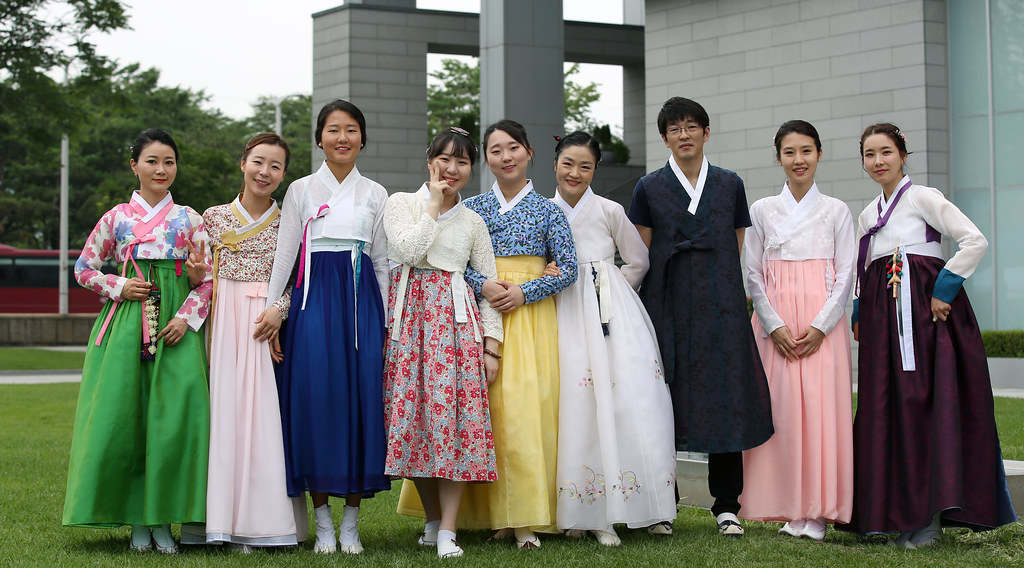
Modern Reimaginings: Hanbok in Contemporary Style Trends
Hanbok has seen an intriguing metamorphosis as South Korea embraces modernity and globalization, fusing traditional components with modern fashion trends. Designers are keeping the cultural value of Hanbok while reinterpreting it for a younger audience. Contemporary takes on Hanbok frequently incorporate daring colors, fresh textiles, and creative cuts to create clothing that is appealing to a wider range of people.
The fusion of components influenced by Hanbok fashion with regular clothing is one style worth mentioning. Casual apparel, accessories, and footwear from numerous South Korean fashion brands now feature Hanbok motifs. People can embrace their past while adjusting to the fast-paced lifestyle of modern civilization because to this mix of styles. A younger audience finds Hanbok to be more relevant and alluring because to the accessibility of these contemporary designs.
Social media sites have been essential in marketing the contemporary Hanbok versions. Influencers and fashion aficionados inspire others to try new looks by showing their original interpretations of classic attire. People now feel more connected to one another in the digital age as they exchange Hanbok stories and encourage one another to recognize the depth of their culture.
In addition, Hanbok-themed fashion displays and exhibitions are becoming commonplace on a national and worldwide scale. Hanbok designers have had the opportunity to showe their inventive works on international stages thanks to events like Seoul Fashion Week. In addition to improving Hanbok’s standing in the fashion business, this exposure has increased global awareness of Korean culture.
An important factor in the rebirth of Hanbok has also been the emergence of Korean pop culture, including K-dramas and K-pop. During promotional events and concerts, many idols and celebrities dress traditionally, introducing Hanbok to a worldwide audience. This prominence has helped to close the gap between modernity and heritage by generating interest in traditional clothes.
In conclusion, current Hanbok modifications show how tradition and modernity interact dynamically. Hanbok is a powerful emblem of Korean identity and cultural pride that keeps evolving as designers experiment and reimagine traditional features.
Cultural Significance: The National Identity of Hanbok
As a representation of national identity, hanbok captures the spirit of Korean culture and history. It helps people feel more connected to their roots and a sense of belonging by acting as a visual depiction of the nation’s history, customs, and values. Hanbok is a cultural relic that spans generations and embodies the identity and collective memory of the Korean people.
Wearing hanbok frequently evokes strong feelings connected to one’s past and family. Wearing a Hanbok arouses sentiments of pride and nostalgia on important life events like weddings and birthdays. This sentimental bond strengthens the clothing’s function as a medium for cultural expression, enabling people to honor their ancestry.
Hanbok plays a big role in South Korea’s cultural diplomacy. The government aggressively promotes Hanbok on a global scale by presenting its beauty at a range of cultural events and exhibitions. Through this technique, people from many backgrounds can experience the richness of Korean culture and develop an appreciation for it.
Hanbok is an essential teaching tool for traditional values and rituals in educational settings. Hanbok is a popular curriculum addition in schools, where it inspires students to take part in activities that build ethnic pride and learn about their background. To ensure the survival of the tradition, it is imperative that future generations understand the significance of Hanbok through this teaching approach.
Hanbok’s importance as a symbol of national identity has increased due to the world’s love with Korean culture, especially in relation to the Hallyu (Korean Wave). As the world grows more familiar with Korean customs via media, fashion, and food, hanbok becomes a symbol of cultural pride that transcends national boundaries.
In summary, the hanbok is more than just traditional clothing; it is a potent emblem of national identity that captures the essence of Korea. Beyond the actual clothing, its cultural importance creates links between the past and present and builds a sense of pride and unity among Koreans around the world.
The examination of Hanbok reveals the great beauty and cultural significance of this garment. Hanbok is still a representation of cultural pride and national identity, despite changes over history. Hanbok’s ongoing appreciation and preservation are essential to preserving South Korea’s cultural legacy as it works through modernity. Future generations will preserve the rich heritage of Hanbok by respecting this traditional clothing, guaranteeing that its essence will remain an essential component of Korean identity for many years to come.